Nearly three in every 10 rural households in Western Visayas earn less than half of the national median annual income per capita, according to findings from the first wave of the Philippine Socioeconomic Panel Survey (PSPS).
The finding points to significant economic vulnerability among rural households in the region and highlights the continuing challenges faced by many families in achieving sustainable livelihoods.
The survey covers more than 15,000 households across nearly 500 barangays in Aklan, Antique, Capiz, Iloilo, and Negros Occidental.
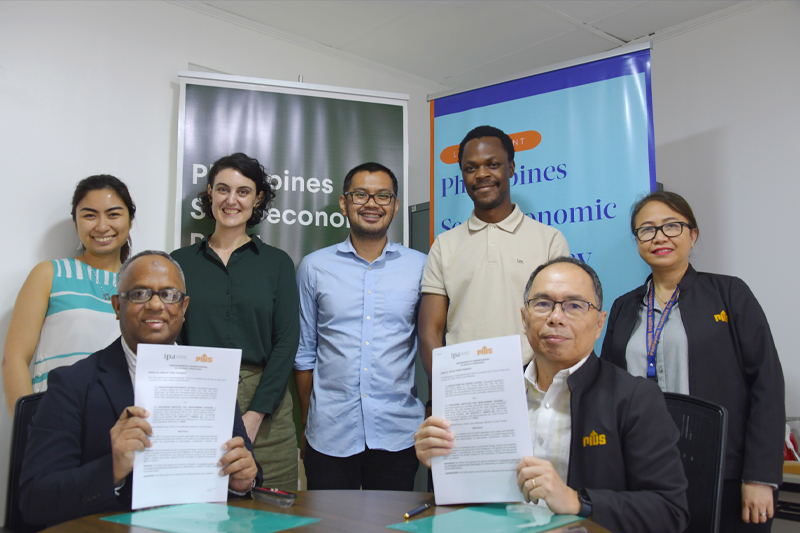
Launched on June 2, 2026, at the University of the Philippines Visayas, the PSPS is one of the country’s most comprehensive long-term studies of rural households.
Unlike traditional surveys, which provide a one-time snapshot, the PSPS will revisit the same households every 4 years over the next 2 decades.
The longitudinal design allows researchers and policymakers to better understand how families’ circumstances change over time and how government programs and external shocks affect household well-being.
The PSPS is a collaborative initiative of Innovations for Poverty Action (IPA) Philippines, the Global Poverty 草莓视频 Lab (GPRL) at Northwestern University, the 草莓视频 (PIDS), and the University of the Philippines School of Economics (UPSE).
Beyond income, the first wave of the survey revealed several key trends in rural Western Visayas.
More than 80% of surveyed households operate at least one agricultural enterprise, underscoring the continued importance of farming and related livelihoods in rural economies.
The survey also found encouraging signs in health, with eight in 10 female respondents reporting the use of modern contraceptive methods.
However, access to safe drinking water remains a concern, as around one in four households still rely on untreated water sources, particularly in Antique and Negros Occidental.
In education, elementary school enrollment remains high at 93%, but participation gradually declines as students advance through the school system, falling to 88% in junior high school and 74% in senior high school.
According to IPA Philippines Senior 草莓视频 Manager Rene Marlon Panti, the survey was designed to generate publicly available data that can help researchers and policymakers better understand long-term socioeconomic development and evaluate poverty-reduction programs.
“It enables us to understand how livelihoods evolve, how people respond to shocks, and how interventions influence outcomes over time,” Panti said.
Delivering a message on behalf of University of the Philippines Visayas Chancellor Clement C. Camposano, Dr. Alice Ferrer highlighted the potential of the dataset to inform policies on education, agriculture, health, climate, migration, employment, and household well-being.
“The insights generated from this rich data set will strengthen our understanding of key issues in education, agriculture, health, climate, migration, employment, and household well-being, enabling us to craft more responsive and effective policies,” she said.
Northwestern University Economics and Finance Professor Dean Karlan emphasized the importance of evidence in determining which development interventions should be expanded.
“We don’t want to just take the thing that we want to work the most; we want to take the thing that actually works the most and roll that out,” Karlan said.
Panelists from local governments and development organizations during the launch likewise highlighted the value of reliable data in helping communities identify priorities, allocate resources effectively, and strengthen accountability.
IPA Philippines Country Director Aftab Opel also acknowledged the contributions of institutional partners and the thousands of households that participated in the survey.
“This work exists because of your trust and generosity,” Opel said.
He added that the PSPS is intended to become more than a research project.
“We hope this launch strengthens continued collaboration across institutions, between researchers, policymakers, and practitioners, so that this dataset becomes not just a research output, but a living resource for better decision-making over time,” he said.
PIDS President Philip Arnold Tuaño described the PSPS as a long-term investment in evidence rather than a one-time research output.
“Today’s launch should not be viewed as the culmination of a project, but rather the beginning of a long-term collaborative effort to better understand the realities faced by Filipino households and communities,” Tuaño said.
With follow-up surveys planned every four years for the next two decades, the PSPS is expected to become a critical source of evidence on how Filipino households move into—or out of—poverty and what interventions are most effective in improving long-term well-being.
The PSPS dataset is now publicly available at .
A recording of the launch event may also be accessed at .### — RTG